Social what-a-whats?
You have most likely seen a picture before that moved you in some way, whether it made you laugh or cry. Pictures are a potent form of communication. Social Semiotics refers to how meaning is conveyed through symbols, pictures, and other visual gestures or media work beyond words. The term was first introduced by Michael Halliday in 1978. Social Semiotics are an important part of communication, because they provide a path to understanding on how meaning is created.
We see examples of social semiotics a lot within advertising, appealing to the viewer's emotions. "Many visuals do not even attempt reasoning; they rely instead on emotional appeals. Such appeals are most obvious in advertising, where the aim is to move a target audience to buy a service or product." (Crusius, T.& Channel, C., 2016)
Like any method or strategy, there are some rules when it comes to this:
The tops of images: The top of images often depicts ideals and aspirations.
Left of Image: Depicts the "given information."
Bottom of image: Depicts the reality, or "facts."
th
Right of image: Depicts the "unknowns."
Now, let's look into some pictures and evaluate how they use Social Semiotics:
Top of image: The top of the image shows half of a skull and half of a boy's head. This shows that what we are about to learn will affect the life of a child, and the aspiration is to focus on the living side.
Left of the image: The left side of the image shows us the skull side, with information regarding the probability of death at 40 mph. These are known consequences of speeding and car crashes.
The right side: Gives us new information on the probability of life in a 30 mph crash. Giving the viewer new, shocking, related information that they might not have known before.
Bottom of the image: The bottom of the image also explains the stats, as well as a quote that says, "it's 30 for a reason." This reality is a conclusion to all the given stats and information from the picture, teaching a lesson to the viewers.
All of these functions work together to send a message to the viewer about the importance of safe driving.
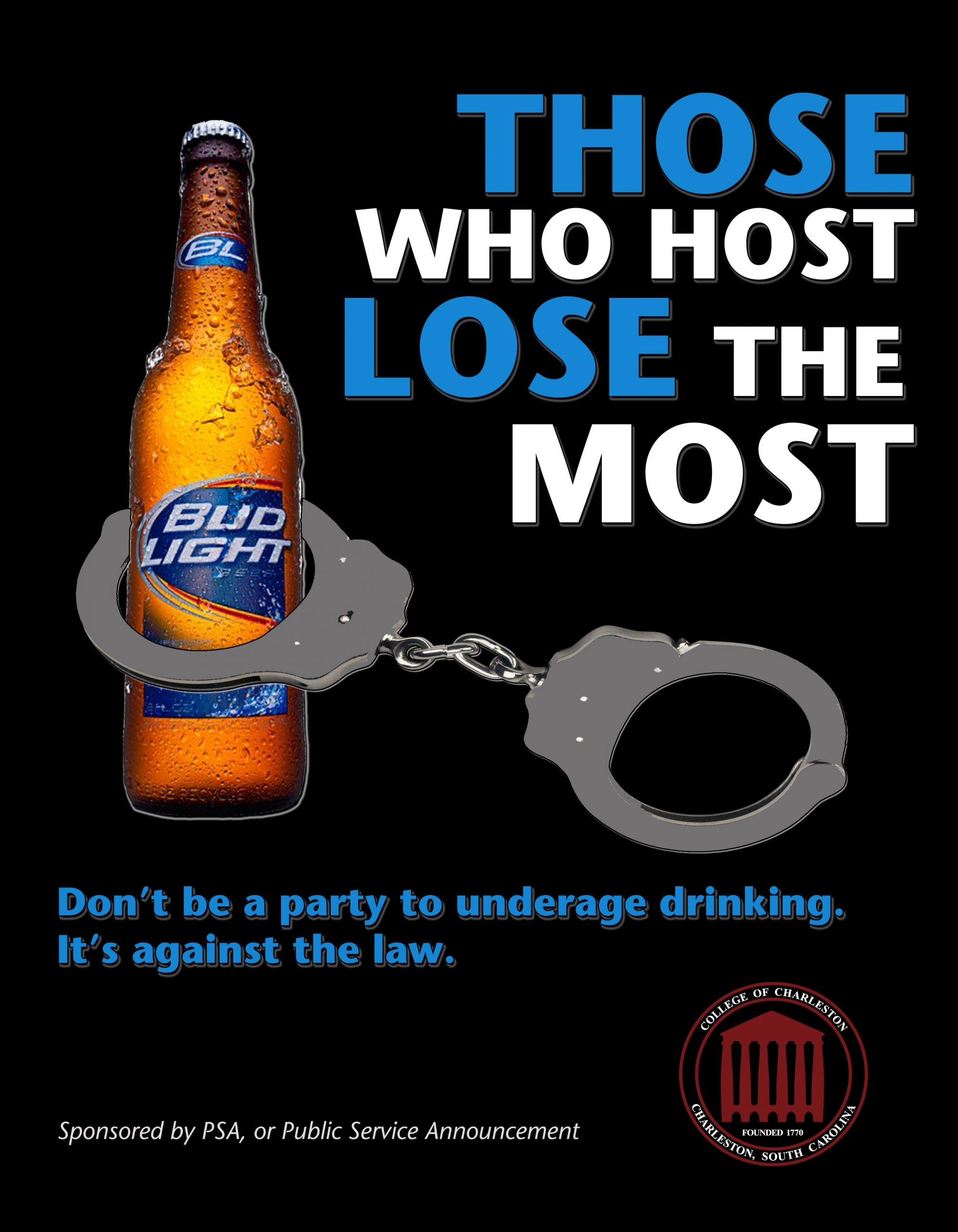
Let's take a look at another image:
Top of the image: The top of this image depicts a big blue and black contrast to grab the readers' attention as they share their ideals about underage drinking.
Left of the image: The left of the image shows a beer bottle cuffed in handcuffs, communicating to the viewer that irresponsibility and alcohol result in arrests.
The bottom of the image: The bottom of the image depicts the facts of the matter regarding underage drinking and its consequences; it tells the audience it is against the law.
Right side: The right side provides new information on the matter, a rhyme that states, "Those who host, lose the most." Informing the audience that they will be at the most risk if they are to host an underage drinking party.
So next time you see an ad, or a picture that speaks to you in some way, think about how they have used Social semiotics effectively to communicate their message to you!
Works Cited:
Crusius, T., & Channell, C. (2016). The aims of argument: A text and reader (8th ed.). McGraw-Hill Education.



No comments:
Post a Comment